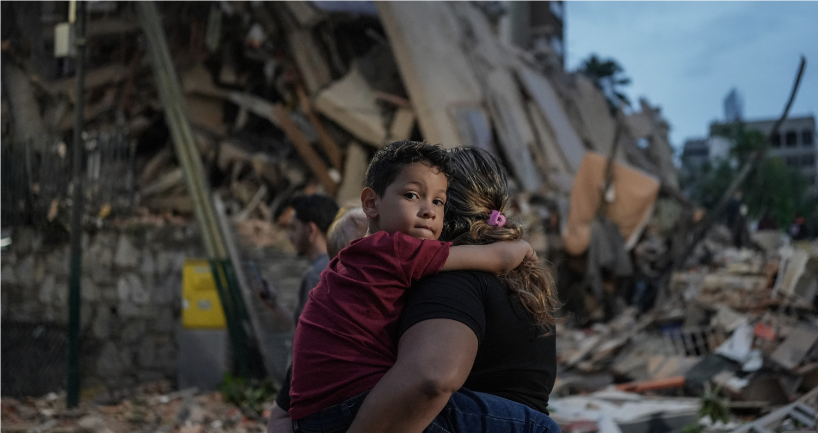
Twin earthquakes, measuring 7.2 and 7.5 magnitude, hit the state of Yaracuy on 24 June, causing widespread destruction across northern Venezuela. La Guaira remains one of the hardest-hit areas, with significant damage to homes, businesses and infrastructure.
As of 7 July, at least 3,600 people have been killed and more than 16,700 injured. The earthquakes have affected an estimated 9.7 million people. Thousands of families remain displaced or too afraid to return home.
Tens of thousands of people are expected to need emergency shelter and essential household items, and many families may require longer-term support as recovery begins.
The earthquakes struck just 39 seconds apart near San Felipe in Yaracuy state. Around 770,000 people live within 30 miles of the epicenter, with an estimated 4.4 million people living within 62 miles, highlighting the potential scale of the humanitarian impact. More than 20 aftershocks have since been recorded as assessments continue.
Recognizing that recovery begins with shelter. Having somewhere dry and warm to sleep, to prepare meals and be with your family is vital for starting the long process of rebuilding your life. Emergency shelter offers privacy and helps to preserve your dignity. It offers protection from the elements, animals and disease. It helps keep communities together. It can help to bring back a sense of normality, allowing children to go back to school. Most importantly, it empowers people to start the process of getting back on their feet.
District 5340 suggests that the best way to help, at this time, is through ShelterBox USA. Shelter Box USA is working with trusted partners in Venezuela to assess the situation and better understand the shelter needs of affected communities.
Over recent months, they have strengthened partnerships and preparedness efforts across the region, putting us in a strong position should a ShelterBox response be required. We also have emergency shelter and essential aid pre-positioned in Barbados and Panama, enabling us to move quickly if support is needed.
As assessments continue, their team is drawing on experience from previous earthquake responses—including those in Turkey and Syria, Morocco, and the Philippines—to inform response planning. Those responses have included emergency shelter, shelter kits, solar lights, blankets, and other essential household items to help families stay safe and begin recovering after disaster.