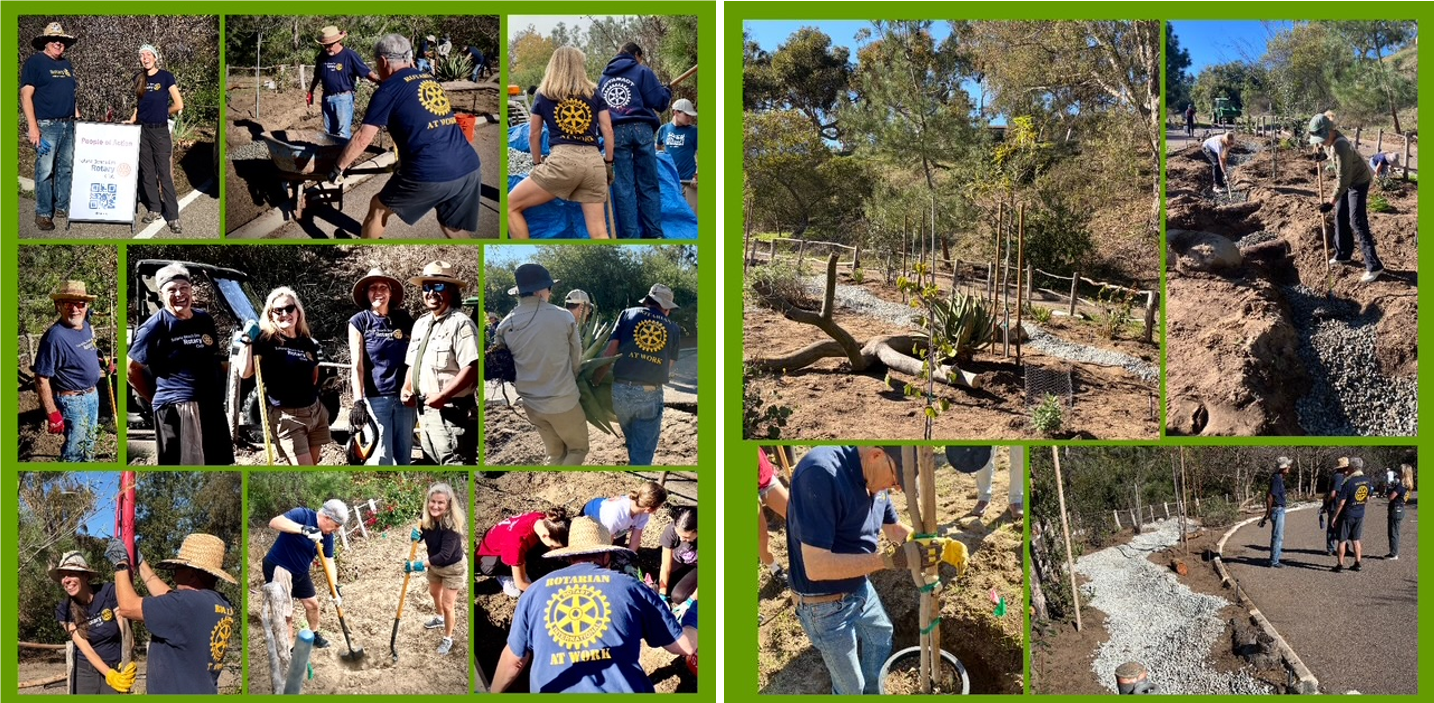
The Solana Beach Eco Club has embarked on a Stormwater Makes Retained Treasure Garden Project inspired by a park ranger's vision of establishing a vibrant native pollinator garden with San Dieguito Park.
Solana Beach Eco Rotary (SBECO) collaborated in developing plans to transform a patch of land, previously dominated by Bermuda grass, into a showcase garden. Their proposal featured a built-in rainwater collection system, leveraging the garden’s strategic position at the end of a long road, adjacent to a parking lot and hillside. Rather than allowing rainwater—often polluted by street runoff—to flow directly into a nearby storm drain and out to the ocean, the team aimed to redirect it into the garden, nourishing the plants and supporting their growth. This innovative approach is both a “smart” solution and a true treasure, offering substantial environmental benefits.
Environmental Benefits
- Flooding Mitigation and Erosion Prevention: As San Diego increasingly experience longer droughts and heavier storms, SMRT Gardens make efficient use of rainwater, helping to clean and recharge groundwater while reducing the risk of flooding and soil erosion.
- Cooling Urban Spaces: By lowering temperatures on streets, parking lots, and sidewalks, SMRT Gardens help create cooler environments and reduce the urban heat island effect.
- Wildlife Habitat: These gardens offer essential habitats for pollinators and other wildlife, promoting urban biodiversity.
- Pollution Reduction: SMRT Gardens filter stormwater, absorbing pollutants commonly found on streets that could otherwise end up in our ocean. The plants also help clean city air.
- Climate Mitigation: SMRT Garden plants contribute to carbon storage, aiding in climate mitigation efforts.
Project Phases
Phase 1: Stormwater Collection System (Nov 2)
The first phase of the garden’s installation involved constructing dry stream beds and stormwater retention basins. These features were designed to channel rainwater from the street and parking lot into the garden, retain and store rainwater and help the plants thrive.
Phase 2: Progress (Nov 9)
In the second phase, street curbs were cut to create three entry points for rainwater into the garden. Volunteers also prepared planting holes for the new plants scheduled for installation.
Phase 3: Raincheck (Nov 16)
The third phase was temporarily paused due to an atmospheric river that delivered over two inches of rain—a key test for the garden’s design. This rain event allowed SBECO to observe the garden’s performance under heavy rainfall and to make necessary adjustments to the shapes and sizes of the retention basins, optimizing them for future storms.
Phase 4: Finishing Touches (Nov 23)
During the final phase, volunteers focused on removing weeds that had flourished with rain and planting new native shrubs and trees. Natural logs were introduced to reinforce the dry stream bed to enhance the garden’s appearance and provide additional habitat for pollinators. Gravel was added to the dry stream bed and retention basins to slow erosion.
Future Plans
Looking ahead to spring, SBECO plans to plant a variety of perennials that will attract native pollinators, install bee boxes and bat houses, and create educational signs to inform visitors about the garden’s features and benefits.
Gratitude and Impact
Sincere gratitude is extended to the volunteers from SBECO Rotary, SDSU Rotaractors, Park Rangers, the Torrey Pines High Urth Club, California Climate Action Corp, and many others who contributed to the SMRT Garden Project. Their dedication and service have made a meaningful impact on the community.
Would you like a SMRT Garden Project in your community? It is a rewarding environmental and educational project. Contact Jenny Parker at jenny@jparkermd.net.